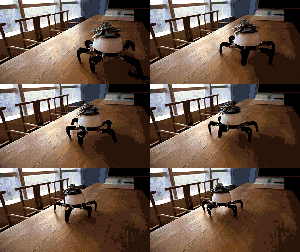
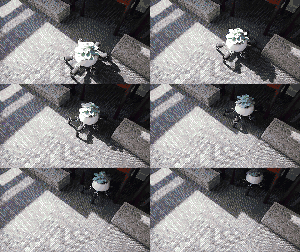
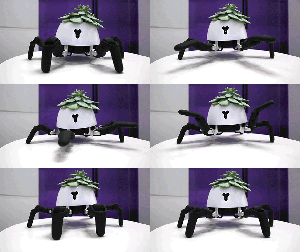
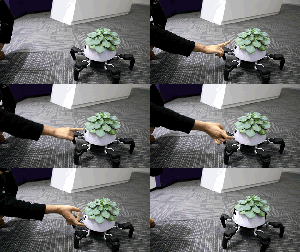
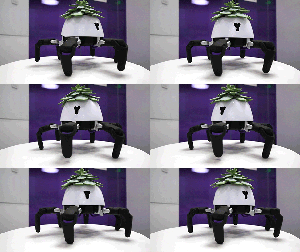
This adorable little robot is designed to make sure its photosynthesising passenger is well taken care of. It moves towards brighter light if it needs, or hides in the shade to keep cool. When in the light, it rotates to make sure the plant gets plenty of light. It even likes to play with humans.
Oh, and apparently, it gets antsy when it’s thirsty.
The robot is actually an art project called “Sharing Human Technology with Plants” by a roboticist named Sun Tianqi. It’s made from a modified version of a Vincross HEXA robot, and in his own words, it’s purpose is “to explore the relationship between living beings and robots.”
apparently ppl don’t know about waifu2x??? despite its… concerning name it’s literally the most convenient website i’ve ever come across as an artist
it allows you to resize artwork without it becoming pixellated. this is a MASSIVE help if you, for example, make lineart too small or something. it works best with things that 1. have no textures 2. have smooth lines 3. have cel shading, but it still works really damn well for things that don’t fit that profile
here’s an example:
normal size
2x in paint
2x in waifu2x
so like, there’s that. go wild
Original:
Photoshop scaled:
Waifu2x scaled:
It’s legit!! Tell your friends!
waifu2x-multi is the newer version. It allows for rescaling multiple pictures at a time and to scale them up to 10x the original size.
As much as I like to complain about my weaknesses when it comes to writing, I’m happy to say that creating characters isn’t one of them. So for anyone who wants it- my quick guide on creating characters.
This list is for anyone who has a vague idea for a character but doesn’t have a plot or a role in the story for them to fill.
It’s for people who have a plot in mind, but lack characters to place in it.
It’s for people who love those long, detailed character spreadsheets, but don’t have the patience (or know all the answers) to fill them out. The points I’ve listed below will probably overlap heavily and influence one another- for instance, “societal/cultural influences“ may inform both “philosophy“ and “defining relationships“. It pulls the character together.
Keep in mind that this is not everything you want to know about your character- you should continue to flesh them out as you write them. This is just a baseline, a starting point, an I-just-want-to-write-something-with-this-character-but-I-know-absolutely-nothing-about-them list so you can jump into writing with or without a plot in mind. It describes them as they are on a typical, ordinary day. As you continue to write and develop them, they will become more nuanced and take on a life of their own.
Base Personality
Jot down some base personality traits. Don’t worry about getting an equal number of positive and negative traits down- or even which is which. Just feel out the character’s base personality.
Significant Historical Events
What events have had the greatest impact on your character (that you know of so far)? Again, don’t worry about getting everything- you can always add more here as they come to you later. Hit the major turning points in your character’s life.
Societal/Cultural Influences
What societal and cultural backgrounds do your characters have? Are they living/working/existing in an area where these influences are the majority or the minority?
Philosophy
What is your character’s default philosophy when it comes to right and wrong, or difficult moral choices? (I usually use the D&D alignment system for its simplicity- feel free to be as detailed or not as you wish).
Defining Relationships
What are this character’s defining relationships? Enemies, friends, and family are good places to highlight.Major conflicts and points of contention are great starting points for plots.
Goals
What does your character want more than anything? What are you preventing them from getting over the course of the story? If any minor goals pop up while you’re writing, jot those down too.











 💜🎵GlowLite🎵💜